Retinol is probably the most studied active ingredient in dermatology. Decades of research confirm its effectiveness against wrinkles, spots, acne, and dull complexion. But it's also one of the ingredients that generates the most confusion.
This guide explains what retinol actually does, how to introduce it into your routine without irritating your skin, and what alternatives Korean skincare offers.
Retinol, retinoids, retinal: let's clarify the terms
The word "retinol" is often used as a generic term, but it actually refers to a specific molecule in the retinoid family:
- Retinoids: the entire family of vitamin A derivatives
- Retinol: an over-the-counter retinoid that must be converted to retinoic acid by the skin (2 conversions)
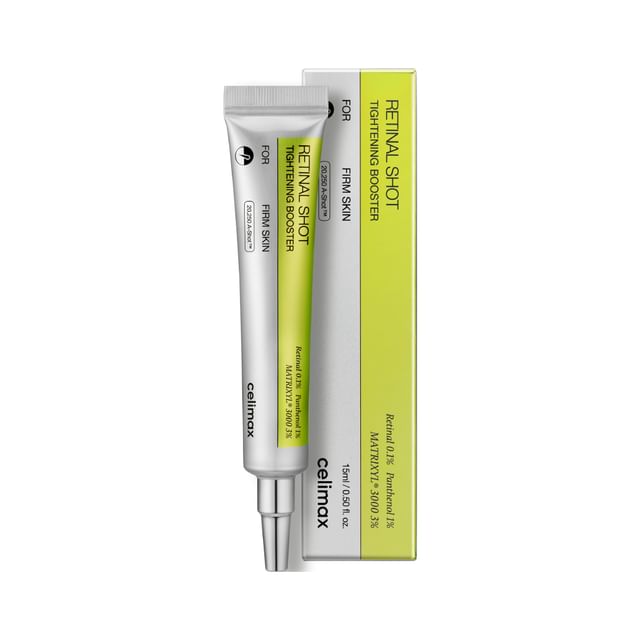
- Retinal (retinaldehyde): one step above retinol, only one conversion needed — more effective, better tolerated
- Tretinoin (retinoic acid): the active form, prescription only
- Retinyl palmitate: the gentlest form, least effective
In Korean skincare, you'll mostly find retinol and retinal. K-beauty brands favor moderate concentration formulations, combined with soothing actives.
What retinol does for your skin
Stimulates cell turnover
Retinol accelerates the skin cell renewal cycle. Dead cells are eliminated faster, leaving behind fresher, smoother skin.
Stimulates collagen production
By penetrating the dermis, retinol stimulates the production of collagen and elastin. This is what gives it its anti-wrinkle effectiveness — an effect that few other topical actives can claim with as much evidence.
Reduces spots and dull complexion
Retinol reduces hyperpigmentation by regulating melanin production and accelerating natural exfoliation. For brown spots, it's often combined with vitamin C or niacinamide.
Anti-acne action
Retinol unclogs pores by normalizing sebum production and cell renewal. It's one of the first-line treatments for persistent acne.
How to start with retinol
The golden rule: gradual introduction. Retinol almost always causes an adaptation phase called "retinization" — redness, flaking, dryness — that typically lasts 2 to 6 weeks.
Weeks 1-2: acclimatization
- Apply retinol once a week, in the evening
- Starting concentration: 0.025% to 0.05%
- Apply to dry skin, 20 minutes after cleansing
- Follow with a rich moisturizer
Weeks 3-4: increase frequency
- Move to twice a week
- If no irritation, continue
Month 2+: established routine
- Gradually increase to 3 then 4 times a week
- Some skin types tolerate daily use after 2-3 months
The "sandwich" method
If your skin is sensitive, use the sandwich technique: moisturizer → retinol → moisturizer. This method buffers the active and reduces irritation without significantly decreasing effectiveness.
Mistakes to avoid
Not wearing sunscreen. Retinol makes skin more sensitive to UV rays. An SPF 50 sunscreen is mandatory every morning when using retinol, even in winter. Beauty of Joseon Relief Sun SPF50+ is a lightweight option that works well.
Starting too strong. A 1% retinol applied every evening from day one guarantees irritated, red, and flaky skin. Gradual introduction is non-negotiable.
Combining with too many exfoliants. Retinol + AHA + BHA the same evening is a recipe for destroying your skin barrier. On retinol nights, avoid other exfoliants.
Stopping too early. Retinol results take time. Allow a minimum of 12 weeks for wrinkles, 8 weeks for spots. The retinization phase is not a sign that the product doesn't suit you — it's normal adaptation.
Retinol vs retinal: which one to choose?
Retinal (retinaldehyde) is increasingly present in Korean products. Its advantages:
- More effective: only one conversion to the active form (vs two for retinol)
- Faster: visible results sooner
- Better tolerated: paradoxically, retinal often causes less irritation than retinol at equivalent efficacy
- Antibacterial action: a bonus against acne
If you're starting out and hesitating between the two, 0.05% retinal is an excellent starting point.
Retinol in Korean skincare
K-beauty brands approach retinol differently than Western brands. Rather than offering high concentrations, they prioritize:
- Moderate concentrations (0.1% to 0.5%) encapsulated for gradual release
- Combinations with soothing actives (centella, panthenol, beta-glucan)
- Comfortable textures that don't dry out skin
This "gentle efficacy" approach is consistent with K-beauty philosophy: progressive and lasting results rather than skin shock.
At what age should you start?
There's no strict minimum age. In practice:
- 20-25 years old: focus on sun protection and hydration. Retinol isn't necessary.
- 25-30 years old: mild retinol (0.025-0.05%) 2-3 times a week is good prevention.
- 30+ years old: retinol becomes a major ally. Gradually increase concentration.
FAQ
At what age should I start retinol? For prevention, starting at 25-28 years old with a low concentration. If you have specific concerns (acne, spots), it may be useful earlier, based on dermatological advice.
Can you use retinol in summer? Yes, provided you wear SPF 50 sunscreen every day without exception. Retinol itself is not photosensitizing (it doesn't cause sunburn), but it slightly thins the stratum corneum, making skin more vulnerable to UV rays.
Retinol or retinal: which one to choose? Retinal is generally more effective and often better tolerated. If you find a retinal product at an accessible price, it's an excellent choice. Otherwise, classic retinol remains very effective with regular use.
Explore the complete Korean skincare guide or discover hyaluronic acid to complement your anti-aging routine.